How to Choose the Right Tea and Coffee Maker Machine for Office Use
A well-equipped office pantry makes tea and coffee part of the daily routine. Choose a machine around your team's beverage preferences, daily demand, space and operating budget.
Introduction
A well-equipped office pantry can make everyday work a little more comfortable. Before going into a meeting or taking a break from the desk, one may take some tea or coffee. In a situation where there are several people using the same pantry, preparation of these drinks becomes an essential part of the daily routine in the office.
Selecting the appropriate machine is, however, not as simple as choosing any machine that can prepare these drinks. The needs of a company with 20 workers differ from those of a corporation that has to serve hundreds of individuals each day. It has to cater for the preferences of the workers and be convenient for them.
The right tea and coffee maker machine for office should match your team's daily beverage needs, preferred drinks, available space and operating budget. Here's what to consider before choosing a machine for your workplace.
1. Understand Your Office's Daily Beverage Needs
The first thing you should do is observe the way your staff makes use of the pantry. Calculate the number of individuals who will be using the machine and how much they drink on a daily basis.
For example, a machine which would serve a small group of employees well could create long lines in a bigger company where all people take a break together.
Before proceeding with the selection of a suitable model, consider the following questions:
- •How many employees will use the machine?
- •How many cups are likely to be prepared each day?
- •Do most employees prefer tea, coffee or both?
- •Are there busy periods before meetings or during scheduled breaks?
- •Will employees use the machine across multiple shifts?
This information will help you limit your choices and avoid getting equipment that can't cope with the daily workload.
Match the machine to your workplace
| Workplace type | What to look for |
|---|---|
| Small office | Compact design, simple controls and moderate capacity |
| Medium-sized office | Reliable dispensing, multiple beverage options and easy cleaning |
| Large corporate office | Higher cup capacity, quick serving and dependable service support |
| Shift-based workplace | Consistent performance, accessible ingredients and support beyond standard office hours |
Use this table as a starting point when comparing machines. Your office's actual daily beverage consumption and peak serving times are more useful indicators than employee count alone.
2. Choose the Right Beverage Options
Everyone working in the office doesn't take the same beverage. While some people may like to have normal tea, others would opt for coffee. A single machine that caters to all this could make the pantry much more functional without wasting any space on multiple machines.
Single-beverage or multi-beverage machine?
A single-beverage machine will do the job if the majority of the employees like the same beverages. A multi-beverage machine is worth considering when the team wants more variety.
Look at the following factors before making a decision:
- •Tea and coffee options: Check whether the machine prepares both beverages or requires separate machines.
- •Milk-based beverages: Confirm whether it uses fresh milk, milk powder or other ingredients.
- •Preparation method: Find out whether the machine uses instant premix or a brewing process.
- •Taste consistency: Check how the machine maintains consistent portions and beverage quality.
- •Ingredient availability: Ensure the required ingredients are readily available.
More choices can come in handy, but only when the employees make good use of them. Pick the right beverages according to your employees' preferences.
3. Compare Capacity and Serving Speed
Capacity is an important consideration when choosing a tea and coffee maker machine for office use. Even if the machine provides a range of beverages, such options will be of little use if employees need to queue up for their turn during break time.
Inquire about the daily number of cups served by the machine and its performance under frequent use conditions.
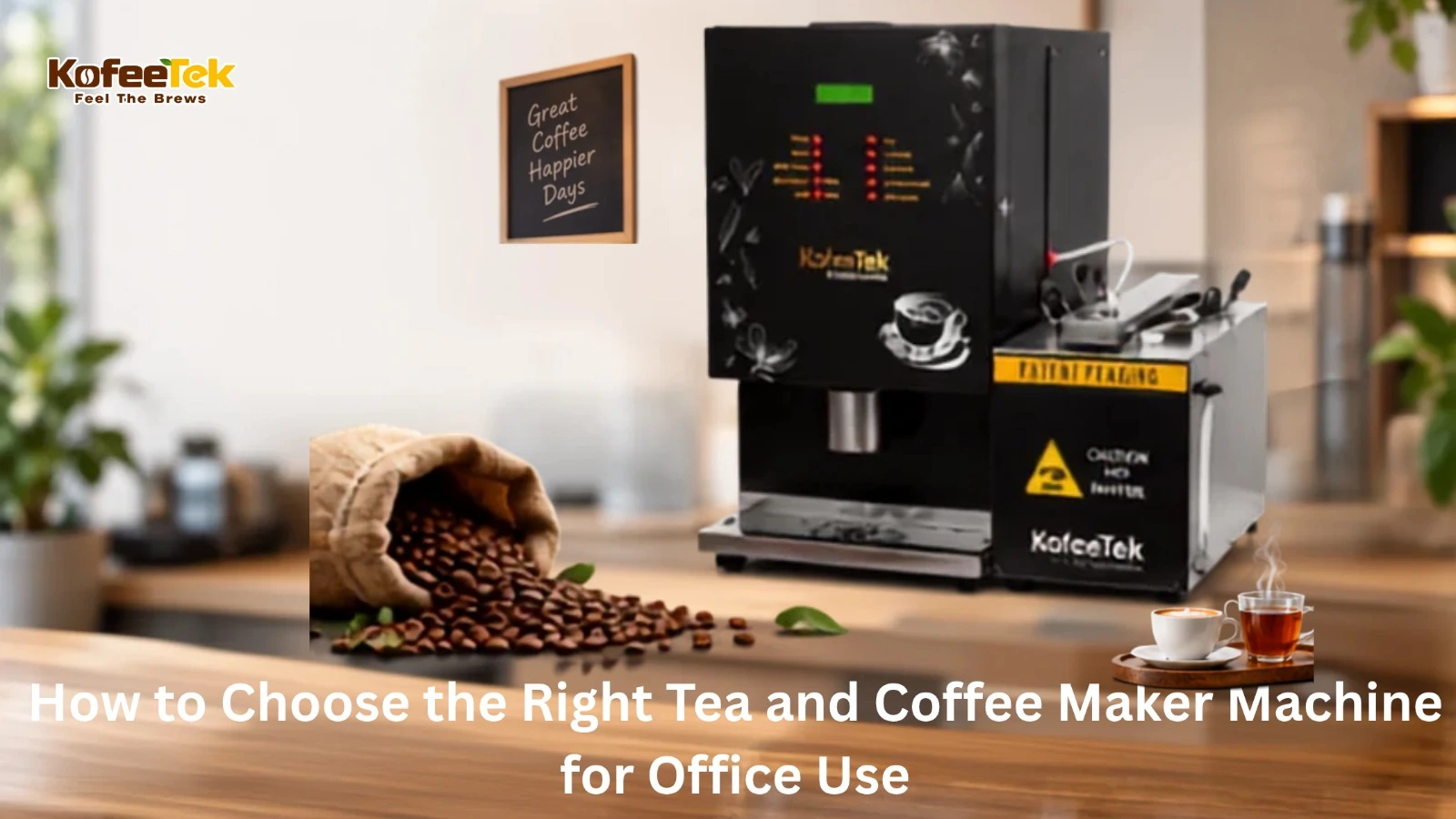
KofeeTek offers machines with different serving capacities to suit different workplace needs. The KT BrewOne with Milk Boiler has a stated capacity of 400 cups per day, while the KT 3-in-1 COMBO has a stated capacity of 600 cups per day. Before choosing a machine, consider how many cups your employees need each day and how quickly the machine can serve drinks during busy office hours.
Capacity checklist
Before selecting a model, check whether it:
- •Can handle your estimated daily cup requirement.
- •Serves drinks at a suitable speed during peak periods.
- •Requires regular refills with water or ingredients.
- •Helps accommodate the timings of shifts in the office.
- •Has clear guidelines for dealing with interruptions or problems.
Do not choose the machine simply based on its maximum capacity. Think about its practicality and ask the supplier if there is an ideal usage rate suggested for your organization.
4. Check Space, Power and Ease of Use
Even a machine with a high capacity has to have a right place to work in. Measure the available pantry space before ordering a machine. Make sure there is enough room for employees to use it comfortably, refill ingredients and clean the equipment without blocking walkways.
An effective list of installation features will include:
- •Available space: Allow room for the machine, cups, ingredients and cleaning activities.
- •Electrical requirements: Confirm the voltage, power rating and connection requirements with the supplier.
- •Accessibility: Place the machine where employees can reach it without blocking walkways.
- •Simple controls: Choose a design that employees can operate without lengthy instructions.
- •Cleaning access: Check whether removable parts and dispensing areas are easy to reach.
For a large number of office visitors, simplicity of use will make a difference all day long. Employees should be able to make their drink, get rid of used cups, and leave the place clear for other people to work without complicating the procedure.
5. Consider Cleaning and Maintenance
Maintenance is very important for an office beverage machine. Milk and other product residues tend to accumulate in the dispensing areas unless the machine is properly cleaned as per manufacturer's guidelines.
It is advisable to inquire about the machine's cleaning process, replaceable parts, and maintenance schedule before purchasing.
| Maintenance factor | What to check |
|---|---|
| Daily cleaning | Which areas need cleaning after regular use? |
| Ingredient containers | How are containers removed and cleaned? |
| Milk system | Does the machine need additional cleaning when milk is used? |
| Routine servicing | How frequently should a technician inspect the machine? |
| Spare parts | Are replacement components available when needed? |
| Technical support | How can you report a fault, and what response time is offered? |
It is equally important to determine who will be responsible for cleaning the machine in the office. Some activities can be taken care of by pantry staff, but servicing must be done according to the supplier's directions.
A regular cleaning and maintenance schedule helps keep the machine ready for daily use and supports consistent beverage quality. Always follow the manufacturer's cleaning instructions, especially for machines that use milk.
6. Decide Whether to Buy or Rent
Buying or renting a beverage machine depends on your office's budget, expected usage and long-term requirements. Compare both options before deciding which arrangement works best for your business.
Buying versus renting
| Factor | Buying a machine | Renting a machine |
|---|---|---|
| Initial payment | Usually involves an upfront purchase cost | Often uses recurring payments |
| Ownership | The business owns the equipment | Ownership remains with the provider unless the agreement states otherwise |
| Maintenance | Depends on the warranty or service arrangement | May be included, depending on the contract |
| Long-term use | Can suit offices planning to use the machine for years | Can suit businesses that prefer a rental arrangement |
| Flexibility | Changing equipment may require another purchase | Changes depend on rental terms and available options |
What should you compare?
Before deciding whether to buy or rent, compare the purchase price or rental charges, ingredient costs, electricity expenses and maintenance fees. This will help you understand the overall cost and choose the option that best fits your office budget.
If you choose to rent, check the contract duration, repair and maintenance coverage, machine replacement terms and cancellation policy before signing the agreement.
If renting suits your office's needs, explore KofeeTek's coffee vending machine rental options to learn more.
7. Check Ingredient Quality and Availability
The machine is only one part of a good office beverage setup. Ingredient quality, storage requirements and consistent supply also affect the taste of each drink and the overall running cost.
First, determine the ingredients the machine uses and the ease with which the office can supply them. Some machines use premix ingredients while others require fresh milk or coffee brewing. The decision on what kind of ingredients you choose depends on your employees' preference and the operation of your pantry.
Pay attention to these details:
- •Taste consistency: Check whether the machine delivers consistent portions from cup to cup.
- •Ingredient availability: Confirm that compatible tea, coffee and other beverage ingredients are readily available.
- •Storage requirements: Understand how ingredients should be stored to preserve their quality.
- •Refilling routine: Check how frequently containers need replenishing during a typical working day.
- •Operating costs: Include ingredient consumption when calculating the total cost of running the machine.
You may also look at KofeeTek's beverage ingredients and consumables to compare the ongoing requirements of various machines.
8. Evaluate the Supplier Before Making Your Decision
A reliable supplier can help your office manage its beverage machine more easily by providing installation guidance, maintenance support, spare parts and advice on selecting a model that matches your daily requirements.
Here are some important questions to answer when looking at various suppliers:
- •Is installation included in the purchase or rental arrangement?
- •What maintenance services are provided?
- •How quickly can technical support respond to a reported fault?
- •Are spare parts and compatible ingredients readily available?
- •Can the supplier recommend a machine based on your daily cup requirements?
- •Are the warranty terms and service charges clearly explained?
In a business environment, reliability of support may turn out to be as important as the specifications of the machine. A supplier familiar with your working conditions can provide a choice of machines which would not complicate your work schedule.
KofeeTek provides [tea and coffee vending machines for offices] (/tea-coffee-vending-machine) of various sizes. You can browse through the choices of machines and talk about their features and servicing.
Conclusion
Selecting the correct tea and coffee maker machine for office is about assessing the needs of your staff. The number of people who will drink from the machine, the beverages they like, the storage space and the costs associated with maintenance are some of the considerations when choosing a machine.
When selecting the machine, take time and consider its specifications. Find out what kind of services suppliers provide and the estimated operational costs. When deciding whether to purchase or rent the machines, compare the cost over the same period and not just the upfront cost.
Ultimately, the right office tea and coffee machine should meet your team's daily needs, fit your available space and remain practical to operate and maintain. Compare machine specifications, ingredient costs and service options before making your final decision.
Frequently Asked Questions
Daily beverage consumption is a good starting point. Consider the number of employees, preferred drinks, peak serving times, available space and maintenance requirements before choosing a machine.
A suitable machine should have enough capacity for daily demand, serve beverages efficiently during busy periods and offer reliable service support. Confirm the recommended capacity with the supplier.
Buying may suit businesses planning long-term use, while renting can reduce the initial investment. Compare the total cost, maintenance coverage and rental terms before deciding.
Yes. Multi-beverage machines can prepare both tea and coffee, and some models also offer milk-based drinks. Available options depend on the machine.
Estimate the number of daily users, cups consumed per person and peak serving times. Share these details with the supplier to identify a suitable capacity.
Cleaning frequency depends on the model, ingredients and usage. Follow the manufacturer's instructions, particularly for machines that use fresh milk.
Check the service response time, routine inspections, spare parts availability, repair charges, warranty coverage and services included in the contract.
Explore KofeeTek's range of office beverage machines and compare their capacity, features and maintenance requirements. Contact the supplier for recommendations based on your workplace needs.